No one was prepared for the exodus of millions of women and children out of Ukraine. Housing and hotels quickly filled up all over Europe. The neighboring countries, Poland, Romania, Hungary, and Moldova, took the brunt of the tidal waves of displaced people. Those countries moved pretty quickly to set up programs and housing for refugees.
Tanya had bounced through all of them looking for a place to land. They had made it all the way down to Spain. Two women, two kids, a dog, and four suitcases. Summer was right around the corner, and Tanya couldn’t find anyone who wanted to rent to Ukrainians. She was tired.
“Why don’t you just come to Romania? My friends told me they could find an apartment as soon as you get here?”
“Paula is afraid someone will kidnap Mira, she’s afraid of gypsies. My brother says there are better opportunities here for business. My dad says Romania is a dangerous country.”
Her excuses sounded a bit ridiculous to me after everything I’d seen and everyone I’d met in Romania. Though I understood them. My first time in Romania was in Constanta in 1998. Prostitutes working because a ship pulled in, legions of homeless children, mafia guys in tracksuits everywhere you looked. I’d carried that image for almost twenty years before Costel invited me back in. Romania had changed. I had seen it with my own eyes. But I couldn’t convey that to Tanya over the phone.
Odesits had their own reasons to be skeptical, layered deeper than stereotypes about gypsies and poverty. In 1941, Romania under Ion Antonescu joined the Nazi invasion of the Soviet Union and participated in the 73-day siege of Odesa. They occupied the city for two years. When a bomb killed several Romanian officers after the siege, the Romanians responded by massacring 30,000 Ukrainian Jews in reprisal.
Tanya’s father had served in the Soviet army in Romania and came home with one verdict — poor country, stay away. Paula was afraid someone would kidnap Mira. Tanya’s brother said Spain had better business opportunities. Everyone had a reason. Tanya’s grandfather was 14 years old during the siege. He fought as a partisan against the Germans and Romanians hiding in the Odesa catacombs. The only thing he ever told Tanya about the Romanian Nazis was that they weren’t so bad. It must’ve been pretty fucking bad before the Romanians came to say something like that.
After being in Spain for a few weeks, Tanya wasn’t able to get anyone to call her back about renting an apartment. She had met some other Ukrainians in Alicante who had long been established there. They told her that it might be difficult to find an apartment because Alicante was a seasonal town, and that peak rental time was coming in the summer. The people who owned apartments were worried that Ukrainians wouldn’t be able to pay or weren’t sure when the war would end, and that they would end up unable to rent their properties out at higher rates during the summer.
I missed Tanya, and I was tired of sleeping on couches. I figured that, as an American, I might be able to help her find an apartment, or at the very least get a call back. I still wasn’t sure what I would do. At the time, I was thinking of getting her settled, spending some time with her, and then heading to Ukraine to join the Legion.
I loaded up my three changes of clothes and flew to Alicante for around $40 one way. Tanya picked me up, and I could tell that the ladies were a little tired of Spain, tired of moving. Her sister-in-law decided to go back to Germany because she knew some people there and had studied German at university. The icing on the cake was the Spanish cucaracha. These ladies weren’t accustomed to these prehistoric mammoths. We woke up the next morning and took Paula and Mira to the airport. We wished them farewell. After the airport, we decided to explore Alicante. The first stop was the Castell de Santa Barbara.
We spent the morning and the afternoon hiking and exploring to the top of Castell de Santa Barbara. We stopped and listened in on different tourist groups hovering over spots of interest in the fortress. We stopped at a rampart overlooking the sea. She had made her way to the top while I was still coming through the entrance. I looked up to see her black hair caressed by the sea breeze. It was her in this moment, taking in the beauty of Spain, and me taking in the beauty of that reflection. I scrambled up to her and looked out at the blue of the Mediterranean. I kissed her on top of the tower built on the Calo Del Maro, the Moor’s face. Named after a powerful Moorish ruler who forced his daughter to marry a wealthy suitor instead of her true love, Ali. Ali, heartbroken, jumped from the top of the castle to his death. The Moor’s daughter Cantara followed the fate of her beloved Ali. Her father, devastated by the loss of his daughter, threw himself from the mountain, his face becoming petrified in the rock.
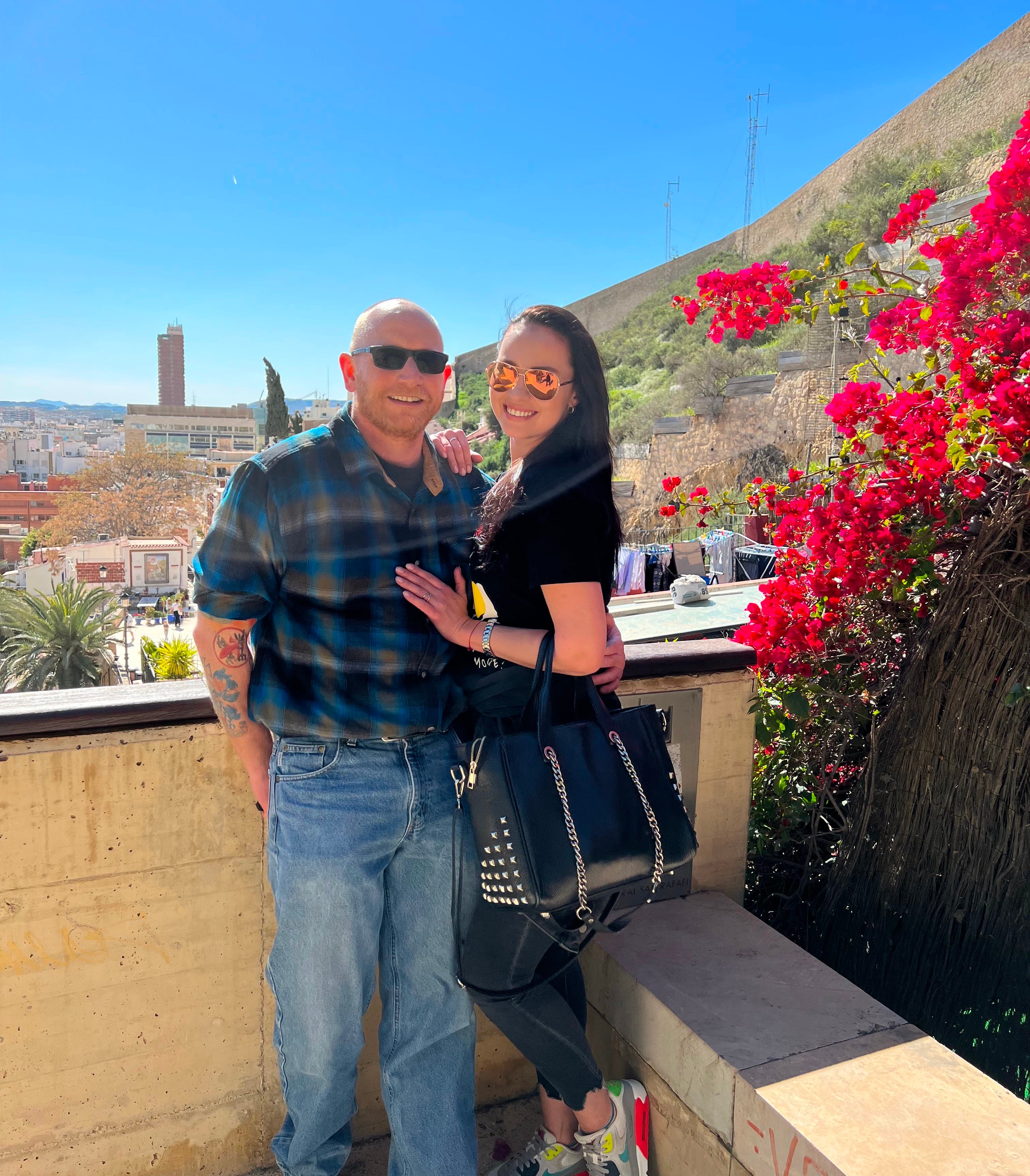
Alicante is said to come from “Ali + Cantara” in honor of the tragic lovers. Now here we were coming together in a place where these lovers had been torn apart. We walked down to the narrow streets of the ancient barrio and had dinner. She caught me up on her adventures, and she told me about the problems she was having trying to rent an apartment. I told her about Romania. About the mountains and the kind people that I had met.
Spain was beginning to grow on me. I thought maybe if we don’t live Alicante, we can go somewhere else in Spain, maybe Rota, where I had spent some time in the 90s. The weather was perfect and I was starting to become a siesta sort of guy. The sun went down, and we sat at the table drinking wine. It was an evening that I didn’t want to end. The next day, we had to face reality, but I wanted to keep living in that moment as long as I could.
I spent the next day calling number after number, trying to at least get a showing of an apartment. Finally, after about 20 numbers, I found someone to agree to a showing. The apartment was in Tanya’s price range and seemed to be in a nice neighborhood. We drove to the neighborhood early to scout around. The neighborhood seemed pretty cool with some nice cafes not too far away.
Tanya was not impressed with the apartment. She doesn’t like bugs, and now looking back, I’m surprised she didn’t go on full attack mode when she saw the cucarachas in the apartment. She went deadly silent on the ride back to the hotel.
“You can get apartment in Romania?” “Yes. Like I can call now and-” “Ok. Lets leave tomorrow.”
Early in the morning, we packed out and loaded up in the car and headed out on our journey through Europe. Except we couldn’t get out of the city. There was a big bicycle race underway, and every road out of the city was closed off. We drove around in circles for three hours before we finally managed to escape.
We drove up the seaside and through desert hills. The drive reminded me of a mix of the Pacific Coast Highway and driving over the Sierra Nevada mountains, headed towards Vegas from California. We drove past old fortresses and rows and rows of orange orchards. Tanya wanted me to stop several times so she could go steal fresh oranges.
Having left Alicante later than we wanted, we made it to a little town at the foot of the French Alps as it was getting dark. We got in just in time for dinner at the restaurant and to sample some of the local wine. It ended up being so damn good we took a few bottles to the room and sat on the balcony to enjoy the color change on the Alps before they disappeared into the dark.
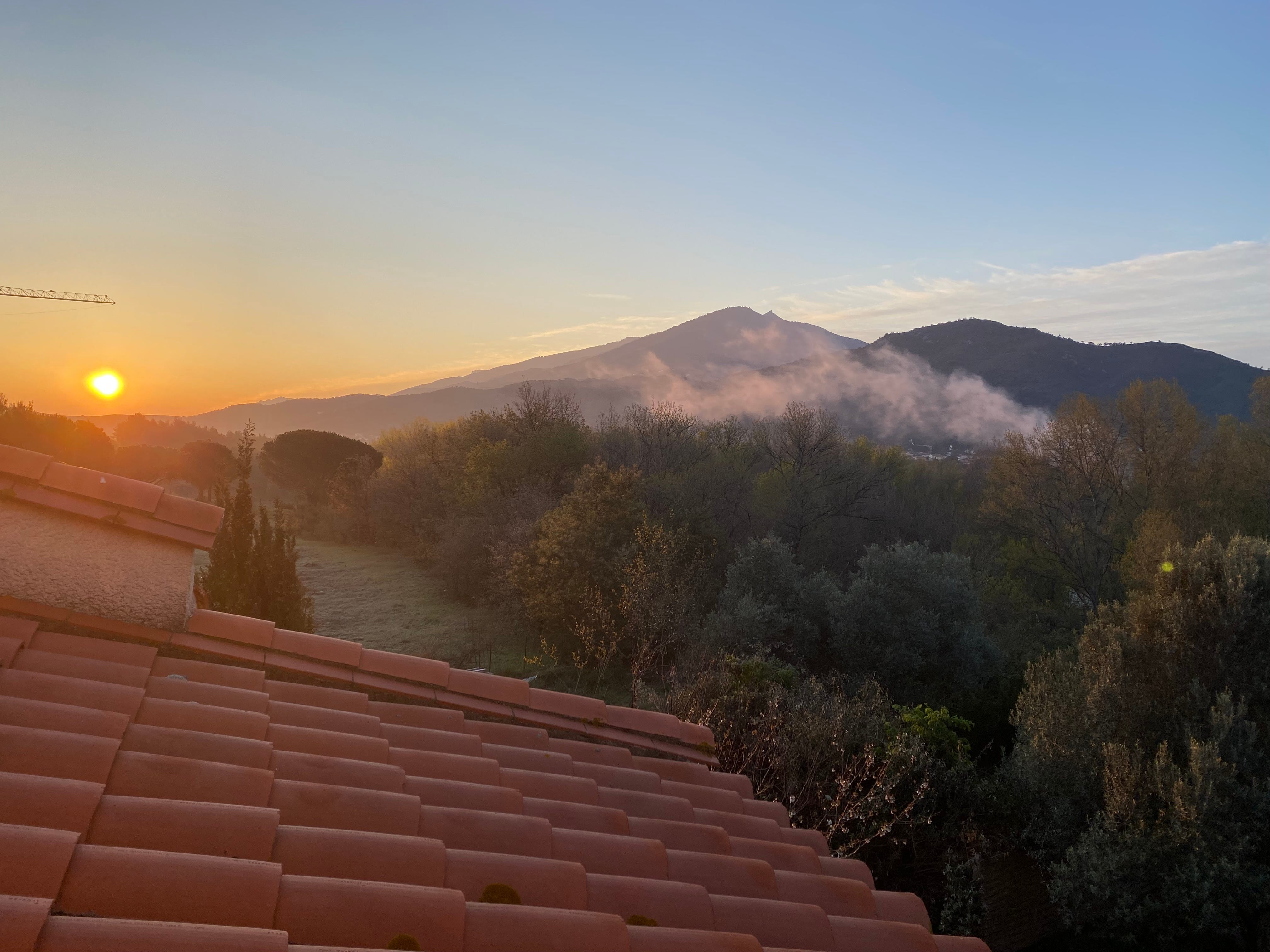
I spent the next few days driving across Europe with the woman I never thought I would ever see in real life, and after I did, I didn’t think I would ever see her again. There she was, sitting next to me, crossing the border from Spain to France and up over the French Alps and through the Black Forest into Germany. The same route that countless European powers had marched troops through over the last 2000 years for either conquest or retreat.
We stopped in Frankfurt to drop off the dog. We met Paula at the train station, gave her the dog, and then walked to the car and drove down to the U.S. airbase in Ramstein. We wanted to do some grocery shopping before getting to Cluj. Tanya was blown away by the never ending rows of canned goods. “Don’t you Americans have anything fresh?” “Ya, but that’s for rich people.”Sadly, to shop there, I needed a tax stamp, which I had arrived too late to get. The next day, we pushed as far as we could, ending up somewhere in rural Hungary.
We didn’t stop to see sights; we only stopped for gas. The countryside of all these countries reminded me of the U.S. in one way or another. We drove past places that time had forgotten, where people still fetched water from wells and used horse and buggy to transport people and equipment.
Finally, after three days of driving, we cruised into Cluj. We were able to find an apartment and move in on the same day. We didn’t have much. She and her son had two suitcases, I had my Kelty backpack and three changes of clothes. With one trip from the car to the apartment, we were moved into our new place.
We walked over to the grocery store across the way together. It was kind of like a super Walmart. They sold appliances, so we picked up a coffee maker. She picked out everything she needed to make dinner and breakfast for the next morning. We took everything back home, and while she cooked, I ran back across the street to get towels and laundry detergent.
We sat down to a meal of borscht, bread, salo, green onions, and mustard. I did the dishes, and her son got ready for bed. After he went to bed and everything was clean, we poured our wine, sat down on the couch, and watched Cloud Atlas before settling into bed. Me, an expat, and her, a displaced person.
This is the 6th part of an ongoing series. If you missed the first installment, start with A Rolling Stoner Gathers No Moss.

No comments:
Post a Comment